Chronic joint and soft tissue pain doesn’t just go away on its own, and many treatments only offer temporary relief or come with harmful side effects. PRP injections take a different approach by using your body’s own healing potential to support recovery, reduce pain, and improve how you move.
What Are PRP Injections?
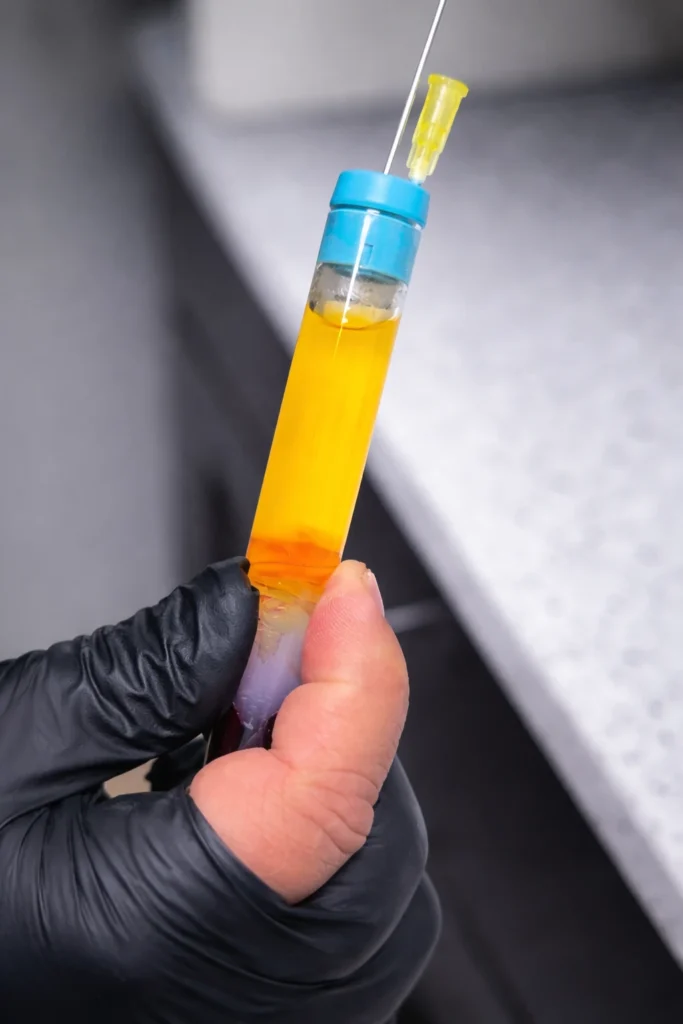
PRP stands for platelet-rich plasma. It’s created using a small sample of your own blood, which is spun down in a centrifuge to separate the platelets from the rest of the blood.
Platelets are the “healing cells” in your body that contain growth factors that play a key role in repairing damaged tissue. When injected into an injured joint, tendon, or ligament, they help reduce inflammation and support recovery from within.
Instead of masking pain like many treatments, PRP works with your body to promote real healing.
How Effective is PRP?
PRP has shown great results in numerous studies for joint pain, inflammation, and osteoarthritis.
At major clinics, PRP injections have shown about a 70% success rate with most patients experiencing significant improvement in pain and movement for several months.
In another study, around 62% of patients with osteoarthritis in their knees saw significant improvements in their symptoms, including less stiffness and higher mobility. Patients also reported about a 35% reduction in pain, making it easier to stay active and handle daily activities.
What Conditions Can PRP Help With?
PRP injections are used to treat a wide variety of joint and soft tissue conditions including:
- Knee pain and osteoarthritis
- Shoulder joint pain and rotator cuff issues
- Elbow pain and tendonitis
- Plantar fasciitis
- Neuropathy
If you’ve been experiencing any of these issues, PRP may be a good option for you.
How Do PRP Injections Help?
PRP injections work by supporting your body’s natural healing process at the root source of the problem.
Release Growth Factors
PRP contains a high concentration of the natural growth factors that trigger the body’s repair process, helping to heal damaged tissue and reduce inflammation.
Tissue Regeneration
The growth factors promote new cell growth and collagen production, which can strengthen cartilage, ligaments, and tendons over time.
Cell Recruitment
PRP sends signals that attract repair cells like fibroblasts and stem cells to the injured area, rebuilding tissue and supporting long-term healing.
Inflammation Control
PRP also helps calm inflammation inside the joint which reduces swelling and creates a better environment for recovery and movement.
The PRP Injection Process
PRP is a simple process and takes under an hour.
- Step 1: Collect blood
- A small amount of your blood is drawn from your arm to begin the process and prepare your treatment.
- Step 2: Separate platelets
- Your blood is then placed in a centrifuge where it is spun down to separate the platelet-rich plasma from the rest of the blood.
- Step 3: Extract the PRP
- The platelet rich portion is collected, which contains the growth factors needed for healing.
- Step 4: Inject the injured area with PRP
- The PRP is then injected directly into the joint or injured area to reduce pain and support repair where it’s needed most.
Why Choose PRP Injections Over Steroids?
While steroid injections can provide short-term relief, they may also cause harmful side effects like joint deterioration. PRP provides a natural approach.
Longer Lasting Relief
PRP often provides relief for 6 to 12 months, while steroid injections usually wear off after a few weeks.
No Long-Term Side Effects
PRP is derived from your own blood and contains no foreign elements, so it’s well-tolerated and safe to repeat over time without the long-term risks linked to steroids or other injections.
Stimulates Repair
Steroid shots may calm inflammation temporarily, while PRP stimulates your body’s natural repair process leading to more sustained relief.
Addresses the Root Cause
Steroids mask symptoms, but PRP works at the source by supporting tissue healing and joint health.
Safe for Long-Term Management
Repeated steroid injections can harm the joint and cause deterioration, while PRP can be used safely as part of ongoing care without any harmful side effects.
What Should I Expect After the Treatment?
You may experience mild soreness or swelling for a few days after the injection, which is a normal part of the healing response. Immediately following the injection, you may also feel a “fullness” in the joint due to the excess fluid.
You can usually return to normal daily activities right away, with gradual improvement over the following weeks.
Most patients begin noticing results within a few weeks, with continued improvement over one to three months.
Are PRP Injections Right For Me?
PRP may be a good option if you:
• Have ongoing joint pain or arthritis
• Want to avoid surgery
• Haven’t found relief with other treatments
• Are looking for a natural approach to healing
The best way to know if PRP is right for you is through a consultation which we offer for free at our clinic.
You can call or text 706-639-3333 to schedule your free consultation.
Frequently Asked Questions
How many injections do I need?
Most patients benefit from a single injection, while others may need a series of injections depending on the severity of the condition. Many times with osteoarthritis, three injections done about a month apart is the standard approach.
Does it hurt?
There may be some mild discomfort during the injection or blood draw, but most patients tolerate the procedure well.
How long do results last?
Relief can last 6 to 12 months or longer, depending on the individual and condition.
Is PRP covered by insurance?
Unfortunately, PRP is not covered by health insurance. You may call our office at 706-639-3333 to ask about pricing.
When can I return to activity?
Light activity can usually be resumed right away, with gradual return to full activity over time.
Is there anything that would prevent me from getting PRP?
PRP is not recommended if any of the following apply to you:
- You have cancer
- You are pregnant
- You have had a knee replacement (for knee injections)
- You are taking certain kinds of blood thinners (you may call our office to see if your medication will affect your ability to receive PRP)
Will any of my other medications affect me getting PRP?
It is recommended that you refrain from taking any NSAIDs (ibuprofen, Aleve, naproxen, aspirin, Celebrex, meloxicam, etc.) for at least one week prior to your treatment and one week after your treatment. These medications will inhibit the full effectiveness of PRP.
Certain blood thinners may prevent you from receiving PRP. Please call our office at 706-639-3333 if you have any questions regarding any medication you are currently taking.
Move Without Pain
You don’t have to let joint pain control your life. PRP offers a safe, natural way to reduce pain, improve movement, and help your body heal.
If you’re ready to feel better and get back to the activities you enjoy, we’re here to help!
Call or text us at 706-639-3333 to schedule your free consultation today!